Toolbox talks are the backbone of proactive safety culture in New Zealand workplaces—especially in construction, utilities, and field services. Yet too many teams treat them as a compliance chore, relying on outdated or generic templates that fail to engage crews or reflect real site risks. A truly effective toolbox talk template NZ sites use should do more than check a box: it needs to spark meaningful conversation, clarify hazards, and reinforce safe behavior on the ground.
This guide cuts through the noise. You'll get practical, ready-to-use insights into creating and deploying high-impact toolbox talk templates tailored to New Zealand regulations, common worksite risks, and real crew dynamics.
Why a Generic Template Fails on NZ Worksites
Many managers download a free PDF toolbox talk template from an international site, tweak the logo, and call it done. But that approach often backfires.
New Zealand’s health and safety landscape—governed by the Health and Safety at Work Act 2015 (HSWA)—emphasises worker engagement and shared responsibility. A one-size-fits-all template from Australia or the UK won’t reflect local compliance expectations or site-specific hazards like unstable soils in North Island excavation zones or coastal corrosion risks in marine infrastructure.
Common mistakes with poor templates include: - Using jargon or acronyms unfamiliar to subcontractors - Failing to assign clear actions or follow-ups - Skipping worker sign-off, weakening legal defensibility - Repeating the same topics monthly with no relevance to current tasks
A good toolbox talk isn’t just documentation—it’s a communication tool. And in high-risk environments, miscommunication kills.
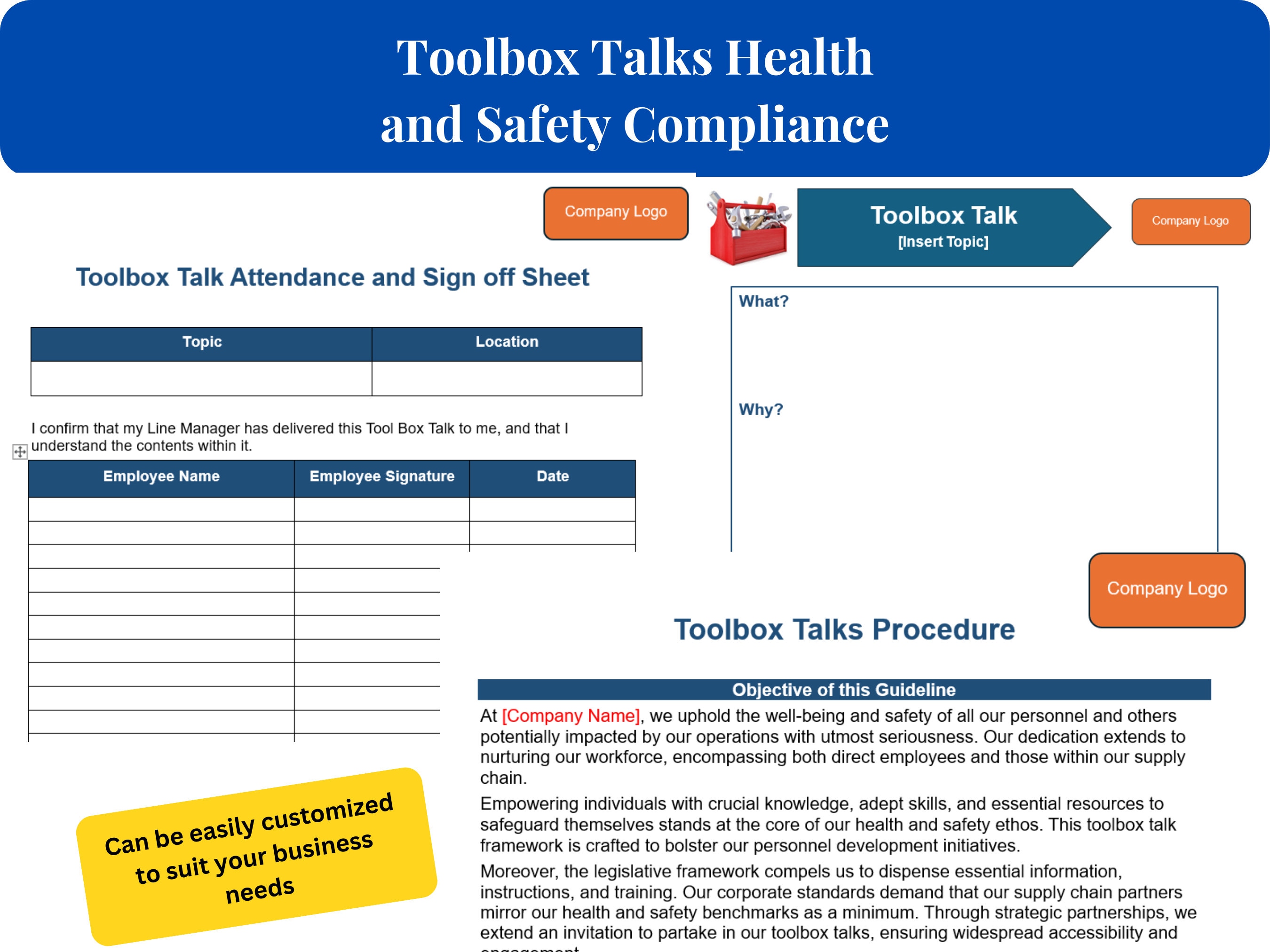
Core Elements of a Compliant NZ Toolbox Talk Template
Your template must be structured to support consistency and legal compliance. Here’s what every effective version should include:
- Date, Time, and Location
- Specifics matter. A talk held at a Christchurch site on a rainy Tuesday has different context than one in Dunedin on a clear morning.
- Attendee List with Signatures
- Workers must sign to confirm attendance and understanding. This is critical for accountability and records.
- Topic and Purpose
- Clear focus: “Working at Heights – Edge Protection Inspection” beats “Safety Talk – Be Careful.”
- Hazard Identification
- List specific risks: e.g., unguarded roof edges, wet ladders, inadequate harness anchor points.
- Safe Work Practices
- Concrete steps: “Always connect to two anchor points when on a sloped roof.”
- Tools and PPE Required
- Name them explicitly: “Hard hat, Class 3 harness, non-slip boots.”
- Emergency Procedures
- What to do if someone falls: who calls 111, where is the first aid kit, how is the area secured?
- Discussion Prompts
- Open-ended questions: “Has anyone seen a near-miss with harnesses this week?”
- Facilitator Name and Role
- Accountability matters. The site supervisor or Health and Safety Representative (HSR) should lead.
A lean, checklist-style format works best—no walls of text. Use bullet points, bold headers, and white space for readability.
Free & Customisable Toolbox Talk Template (NZ-Friendly)
Below is a practical, editable structure suitable for most NZ trades:
Toolbox Talk Record Date: ___________ Time: ___________ Location: ___________
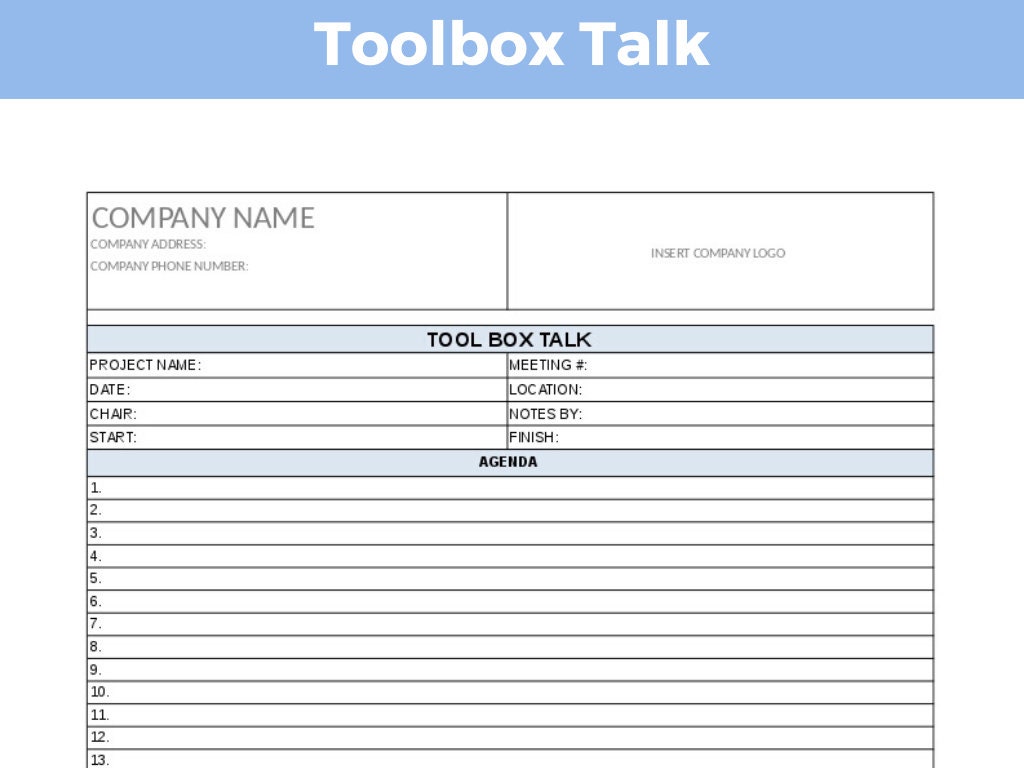
Topic: [e.g., Hot Work Safety – Welding in Confined Space] Facilitator: [Name, Role]
- Attendees:
- _________________________ (Signature)
- _________________________ (Signature)
- (Add more lines as needed)
Hazards Identified: - Risk of fire from sparks - Limited oxygen in confined area - Fumes from welding gas
Control Measures: - Fire extinguisher on standby - Ventilation fan in use - Gas monitor active and calibrated - Hot work permit signed
PPE Required: - Welding helmet - Flame-resistant gloves and jacket - Safety goggles - Respirator
Discussion Questions: - When did you last check your PPE for damage? - Who is the standby person during confined space work? - How do we signal an emergency?
Actions & Follow-ups: - [ ] Re-inspect ventilation setup before shift ends - [ ] Report damaged respirator to site supervisor by 3 PM
Sign-off: Facilitator: _________________________ Date: _________
This format is compatible with NZ legislation and easily adapted to PDF or printed sheets. Use it as a base for your own library of topic-specific templates.
Top 5 Sources for NZ-Ready Toolbox Talk Templates
Don’t reinvent the wheel. These platforms offer high-quality, locally relevant templates:
| Resource | Best For | Format | Cost | Notes |
|---|---|---|---|---|
| WorkSafe NZ Official Site | Compliance accuracy | PDF guides | Free | Limited ready-to-use templates but gold-standard guidance |
| SafetyDocs by Dac Software | Full suite of 200+ templates | Editable DOC/PDF | Paid (subscription) | Widely used in NZ construction; AS/NZS aligned |
| HnS Documents | Site-specific customisation | DOCX, PDF | Paid | NZ-owned, built for HSWA compliance |
| TradeMe Templates (vetted sellers) | Budget options | PDF, Word | $5–$20 | Quality varies—check reviews |
| Site Safe New Zealand | Industry-specific content | PDF, toolkits | Free/Paid courses | Excellent for construction crews |
Pro tip: Pair any downloaded template with a 5-minute site walkthrough before delivery. Tailor the examples to what’s actually happening that day.
Common Topics for NZ Toolbox Talks (With Real Examples)
Tailor your schedule to high-risk activities common in New Zealand operations:
1. Working at Heights Example: “On a Wellington high-rise retrofit, crews noticed guardrails were temporarily removed for crane access. The toolbox talk focused on fall arrest systems as secondary protection—and confirmed all harnesses were inspected that morning.”
2. Plant and Machinery Operation Example: “Before operating an excavator on soft ground near a trench in Hamilton, the talk covered ground stability, spotter roles, and emergency shutdown steps.”
3. Electrical Safety Example: “During a commercial fit-out in Auckland, the team reviewed how to verify isolation tags and test for live circuits—even on ‘dead’ lines.”
4. Manual Handling Example: “A Christchurch roofing crew discussed proper lifting techniques when moving heavy packs of long-run iron on a steep pitch.”
5. Weather-Related Hazards Example: “After a heavy rain in Tauranga, the talk focused on slip risks on scaffolding and checking for washouts near trench walls.”
Rotate topics monthly, but allow flexibility for urgent risks. Never stick rigidly to a calendar if conditions change.
How to Run a Toolbox Talk That Crews Actually Listen To

A template is only as good as the delivery. Even the best form fails if the talk feels robotic.
Do: - Hold it on-site, near the work area - Limit to 10–15 minutes - Use real examples from yesterday’s near-misses - Ask for input—“How would you handle this?” - Rotate facilitators to build ownership
Don’t: - Read verbatim from the page - Conduct it in poor weather with no shelter - Skip sign-offs “just this once” - Use it to reprimand individuals
One Auckland site manager saw participation jump 70% after switching from indoor meetings to morning huddles at the site entrance—using whiteboards to sketch hazards and asking new workers to lead one talk per month.
Legal and Practical Limitations of Templates
Templates reduce risk—but they’re not legal armor.
A signed sheet doesn’t prove understanding. WorkSafe inspectors can challenge your processes if: - Talks are repetitive or irrelevant - Workers can’t recall key points - No follow-up on action items - Subcontractors aren’t included
Also, bilingual crews need accessible language. If your team includes speakers of Samoan, Tongan, or Te Reo Māori, consider translated summaries or visual aids.
And remember: a template isn’t a substitute for active supervision. Use it as a trigger for conversation, not a replacement for it.
Build Your Own Template Library: Action Steps
- Start here:
- Download a base template (use the one above or from SafetyDocs)
- Customise for your top 5 site risks
- Train supervisors to facilitate—not just read
- Store completed talks digitally or in binders for 2+ years
- Review and refresh quarterly
Add photos, diagrams, or QR codes linking to video demos. The more practical, the better.
A well-run toolbox talk doesn’t just satisfy WorkSafe—it builds trust, sharpens awareness, and prevents incidents before they happen.
Use your template as a starting point. But let the real work happen in the conversation that follows.
What should be included in a toolbox talk template in New Zealand? A compliant template should include date, location, topic, hazards, control measures, PPE, emergency steps, attendee signatures, and discussion prompts—all aligned with HSWA.
Are toolbox talks a legal requirement in New Zealand? While not mandated by name, they are a recognised method to meet duties under HSWA for worker engagement and risk communication, especially in high-risk industries.
How often should toolbox talks be held? Weekly is common in construction. High-risk tasks (e.g., excavation, hot work) should trigger additional talks before work begins.
Who can lead a toolbox talk? Supervisors, site managers, or Health and Safety Representatives (HSRs) with knowledge of the task and site conditions.
Can I use a digital toolbox talk app in NZ? Yes—apps like SafetyCulture (iAuditor) or SiteDocs are used across NZ sites, provided they capture signatures, allow real-time edits, and store records securely.
Should subcontractors attend toolbox talks? Absolutely. All persons on site must be informed of risks and controls. Exclude them, and you risk non-compliance and unsafe acts.
How long should a toolbox talk last? Aim for 10–15 minutes. Long enough to cover key points, short enough to maintain focus.
FAQ
What should you look for in Toolbox Talk Template NZ: Practical Guides for Safer Worksites? Focus on relevance, practical value, and how well the solution matches real user intent.
Is Toolbox Talk Template NZ: Practical Guides for Safer Worksites suitable for beginners? That depends on the workflow, but a clear step-by-step approach usually makes it easier to start.
How do you compare options around Toolbox Talk Template NZ: Practical Guides for Safer Worksites? Compare features, trust signals, limitations, pricing, and ease of implementation.
What mistakes should you avoid? Avoid generic choices, weak validation, and decisions based only on marketing claims.
What is the next best step? Shortlist the most relevant options, validate them quickly, and refine from real-world results.